An EU market entry consultant in Indonesia maps your product against the EU compliance stack — EUDR due diligence, EORI registration, HS classification, certificates of origin and phytosanitary paperwork — then sequences buyer outreach around it. Bali Export Consultant runs this as a phased 90-day programme from Bali, quote-based, for Indonesian exporters targeting European buyers.
What follows is compliance information, not legal advice; confirm current deadlines with the European Commission or a licensed adviser, and treat every figure as dated and subject to change.
What does an EU market entry consultant do for Indonesian exporters?
Three failure patterns kill most Indonesian EU attempts: pitching buyers before the documents exist, classifying under the wrong HS code and discovering it at the border, and treating EUDR as the buyer’s problem — until the buyer asks for geolocation data that cannot be produced.
The consultant’s job is sequencing: compliance first, dossier second, outreach third. European buyers moved supplier screening much earlier after the Earthsight and Auriga Nusantara “Risky Business” report of October 2025 pushed EU timber buyers to drop high-risk Indonesian suppliers. A supplier with a complete file now clears screening that an uncertified competitor cannot.
Which documents make up the EU entry compliance stack?
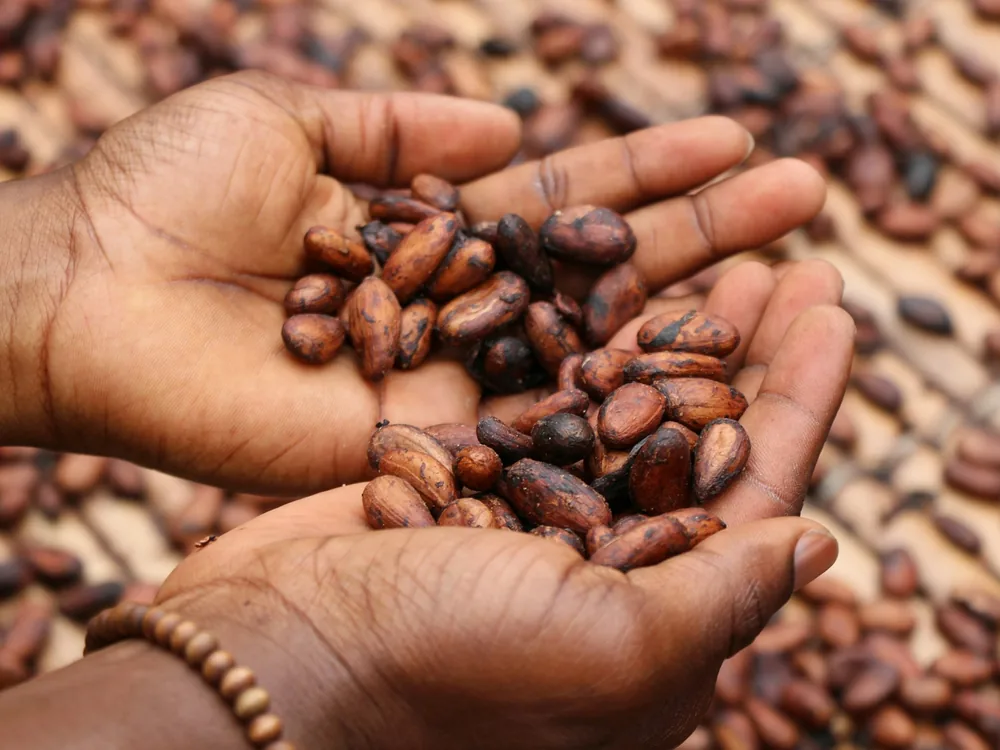
Most Indonesian cargo needs the stack below; forest-risk commodities carry the heaviest load. Indonesia produces four of the seven EUDR commodities: palm oil, coffee, cocoa and rubber.
| Layer | What it is | When the EU side asks for it |
|---|---|---|
| EORI number | Customs identifier for the EU importer of record | Buyer onboarding, before the first purchase order |
| HS code + Certificate of Origin | Tariff classification and origin proof | Quotation stage; verified at customs |
| Phytosanitary certificate | Plant-health clearance for agricultural cargo | At the EU border, per shipment |
| EUDR Due Diligence Statement (DDS) | Filed in the EU TRACES NT system before goods enter, referencing HS code, EORI, origin and geolocation | Before entry, for palm oil, coffee, cocoa, rubber and wood products |
| Geolocation data | Full polygon coordinates for plots over 4 hectares, a single point under 4 hectares, checked against forest cover as of 31 December 2020 | During buyer due diligence and DDS filing |
| Legality file | Farmer identity, national ID and land tenure records; SVLK for timber, now complemented by EUDR-level due diligence | Shipment-level risk assessment |
The EUDR entered into force in June 2023; penalties can reach 4% of EU turnover, plus confiscation of goods and exclusion from EU public procurement.
The Indonesian gap is real. As of Q1 2026, roughly 18–22% of independent smallholder hectares had verified geolocation data in mill supply chains; about 5 million hectares still lacked verified EUDR documentation, at an estimated USD 80–150 per hectare to close. Only about 1% of smallholders supplying forest-risk commodities meet EU traceability and legality certification — which is exactly why a complete file is a commercial weapon, not overhead.
What do EU buyers check before signing an Indonesian supplier?
Buyer due diligence in 2026 runs deeper than a factory audit. Expect requests for:
- A sample DDS, or proof you can support the buyer’s TRACES NT filing
- Geolocation samples from actual supplying plots, not head-office coordinates
- Land tenure and farmer identity records behind the legality claim
- A shipment-level risk assessment covering legality and deforestation risk, with extra documentation where risk is non-negligible
- Consistent HS classification across invoice, packing list and COO
- Whether your data will reconcile with GroundTruthed.id (GTID), the forest-monitoring platform Indonesia is building with the EU
No consultant can guarantee you pass buyer screening or an EU customs check — anyone promising that is selling something else. Preparation removes the findable reasons to reject you.
How does IEU-CEPA change the tariff outlook for 2027?
The Indonesia–EU Comprehensive Economic Partnership Agreement is expected to enter into force in 2027, tying tariff advantages to standards and sustainability. Buyers you sign in 2026 at today’s duty rates become the accounts that benefit first when preferential tariffs land — while latecomers face competitors who already hold the relationships.
Segment choice matters as much as timing. Compliance is a moat where the paperwork is hard: specialty coffee with plot-level traceability, SVLK-plus-EUDR certified furniture and teak, cocoa with mapped smallholder chains. Coconut derivatives and spices sit outside EUDR scope — a lighter stack and a faster first shipment while the forest-risk file is built.
What does the 90-day EU entry plan look like?
| Phase | Days | Work | Deliverable |
|---|---|---|---|
| 1 — Compliance audit | 1–30 | HS-code review, EUDR exposure map, EORI and document gap list, target segment shortlist | Gap report and go/no-go entry decision |
| 2 — Dossier build | 31–60 | Geolocation collection, legality file, DDS dry run against TRACES NT data fields, COO and phyto workflows | Buyer-ready compliance dossier |
| 3 — Buyer outreach | 61–90 | Shortlist of 20–40 buyers in the chosen segment, outreach with dossier attached, sample logistics, quote structure | Live buyer pipeline and first RFQs |
Phase 2 is the long pole where smallholders are involved; verified plot coordinates can add three to six weeks for multi-farm chains.
What does EU market entry support cost?
Every engagement is quoted individually after a scoping call. The figures below are indicative as of July 2026 and subject to change.
| Engagement | Duration | Indicative fee (July 2026, subject to change) |
|---|---|---|
| EU Readiness Audit | 10 working days | IDR 8,500,000 – 15,000,000 |
| 90-Day Entry Programme | 90 days | IDR 35,000,000 – 75,000,000 |
| EUDR Due Diligence add-on | 3–6 weeks | From IDR 20,000,000, scales with plot count |
| Post-entry retainer | Monthly | From IDR 7,500,000 per month |
For market context: SGS Indonesia offers EUDR gap analysis from South Jakarta, and Bali-based The Bali Curator lists a sourcing-and-support package at IDR 12,500,000 as listed in 2026. Our quotes are scoped to your commodity, plot count and target segment, not sold as a flat package.

How does booking work?
- Send your product, HS code if known, and destination market via WhatsApp +62 811-3941-4563 or the enquiry form — destination matters, because an EU stack differs from a US one.
- Take a free 30-minute scoping call to map EUDR exposure and segment options.
- Receive a written quote within three working days: scope, timeline, fee.
- Kick off with document collection and weekly checkpoints.
- Day-90 handover: compliance dossier, buyer pipeline, next-quarter plan.
Ready to scope your EU entry?
Book a strategy call with the Juara Holding Group BD desk: WhatsApp +62 811-3941-4563 or bd@juaraholding.com. Send your product, target EU market and cargo type; you get a scoping slot and a written quote — no retainer required to talk. Part of Juara Holding Group — an Indonesian group operating from Bali across Indonesia since 2015.
Frequently Asked Questions
How much does an EU market entry consultant cost in Indonesia?
Fees are quote-based. As of July 2026, indicative figures at Bali Export Consultant run from IDR 8,500,000 for a readiness audit to IDR 35,000,000–75,000,000 for a full 90-day programme, subject to change. For context, Bali competitor The Bali Curator lists a sourcing-and-support package at IDR 12,500,000 as listed in 2026.
Do Indonesian exporters need an EORI number before shipping to the EU?
Yes in practice. The EORI number identifies the EU importer of record in customs systems, and an EUDR Due Diligence Statement filed in TRACES NT references it alongside the HS code and geolocation data. Buyers ask for confirmed customs identifiers during onboarding, before the first purchase order is issued.
Should I wait for IEU-CEPA before entering the EU market?
No. IEU-CEPA is expected to enter into force in 2027 and ties tariff advantages to standards and sustainability. Buyers signed in 2026 become the accounts that benefit first when duties fall. Waiting also means competing later against exporters who already hold EUDR documentation and buyer relationships. Confirm the ratification timeline with official sources before building it into pricing.
Which Indonesian products face EUDR checks when entering the EU?
Palm oil, coffee, cocoa and rubber — four of the seven EUDR commodities — plus wood products. Goods must be deforestation-free on land not cleared after 31 December 2020 and legally produced, with a Due Diligence Statement filed before entry. As of 2026 the widely cited enforcement date for large operators is 30 December 2025; confirm current dates with the European Commission.
How long does EU market entry take for an Indonesian exporter?
Plan on 90 days to become buyer-ready if documents are in reasonable shape: 30 days for the compliance audit, 30 for the dossier, 30 for outreach. Add three to six weeks where EUDR geolocation data must be collected from farm plots, longer for multi-mill palm oil chains. First paid shipments typically follow one to three months after outreach begins.