
EUDR and Bea Cukai in One Workflow for Bali Producers
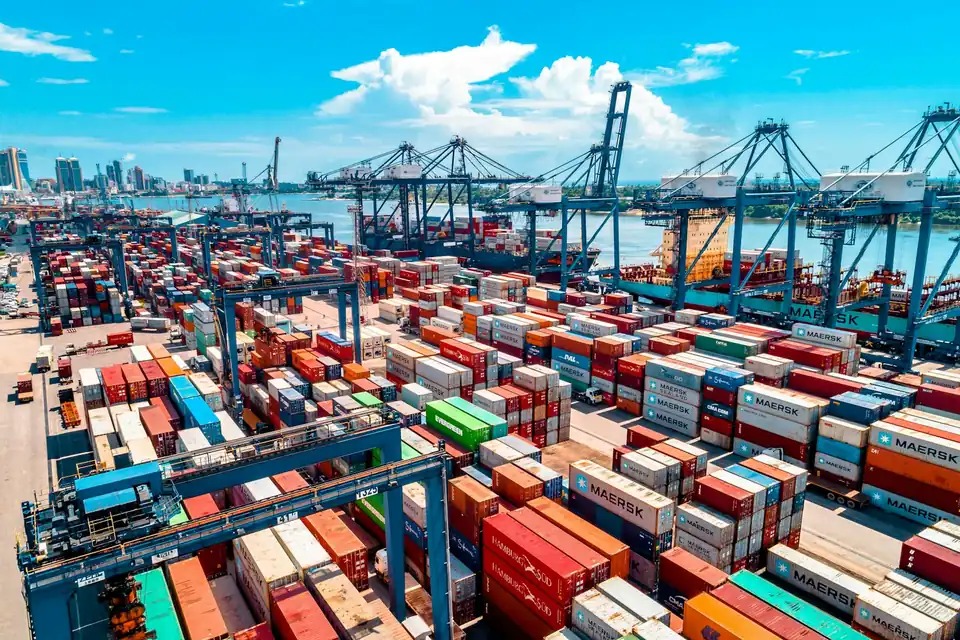
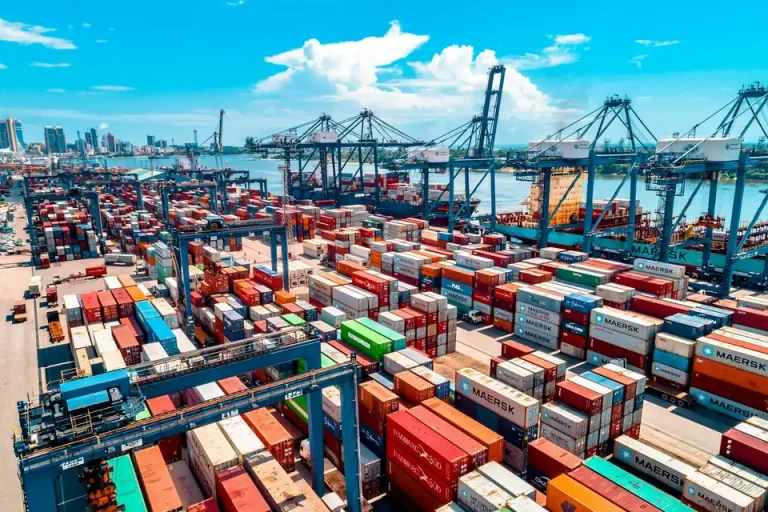
Bali producers shipping coffee, cocoa, or wooden goods to Europe now answer to two paperwork regimes on every container: the PEB declaration Indonesian customs (bea cukai) requires before loading, and the EUDR Due Diligence Statement (DDS) filed in the EU’s TRACES NT system before goods enter the market. Build one data pipeline that feeds both, and every fact gets entered once.
That sounds obvious. In practice, most small exporters run the two regimes in separate folders, retype the same HS code three times, and discover mismatches only when a buyer’s compliance officer does. Below: the integrated workflow, the shared data fields, and a checklist for your shipping SOP. This is compliance information, not legal advice.
Why should PEB and DDS run as one pipeline?
Because both regimes ask overlapping questions about the same shipment. The EU Deforestation Regulation — adopted by the European Parliament in April 2023 and in force since June 2023 — covers seven commodities: soy, cattle, palm oil, wood, cocoa, coffee and rubber. Indonesia produces four of them. Goods must be deforestation-free, meaning produced on land not deforested after 31 December 2020, and legally produced under Indonesian law. Bea cukai, meanwhile, will not release a container without an accepted PEB (Pemberitahuan Ekspor Barang) lodged through the CEISA system and a Nota Pelayanan Ekspor (NPE) authorising loading.
Both files name the same HS code, net mass, origin and parties. When those numbers disagree — a PEB saying 18,000 kg against a DDS saying 19,200 kg — an EU competent authority has a reason to look harder, and penalties on the EU side can reach 4% of EU turnover plus confiscation of the goods. One master record per shipment removes that whole class of error.
One prerequisite sits upstream of everything: only a registered exporter can lodge a PEB. A foreign-owned Bali producer still formalising its NIB export scope and customs access typically clears that through an export setup service Bali desk before the first container, because no workflow survives a missing licence.
Which data fields do bea cukai and EUDR share?
Map the overlap once and duplicate entry disappears. As of 2026 the core fields line up like this:
| Data point | PEB (CEISA) | DDS (TRACES NT) |
|---|---|---|
| HS code | Pos tarif line on the PEB | HS heading referenced on the DDS |
| Net mass / quantity | PEB weight fields | Quantity declared on the DDS |
| Country of production | Origin on the PEB | Origin plus plot geolocation |
| Exporter identity | NIB and NPWP | Supplier named in the due diligence file |
| Buyer | Consignee on the PEB | EU operator identified by EORI number |
| Shipment reference | PEB number, invoice number | DDS reference number |
Everything below that line is regime-specific. Bea cukai alone wants the NPE and any export duty settlement. EUDR alone wants plot geolocation, farmer identity and land tenure records, a legality file, and a shipment-level risk assessment covering legality and deforestation risk — with extra documentation wherever risk is non-negligible.
What does the integrated workflow look like?
Seven steps, farm to vessel, each fact entered once:
- Map plots at sourcing. Collect full polygon coordinates for plots larger than 4 hectares and a single point for plots under 4 hectares, plus farmer ID and land tenure documents. Cross-check against a reference deforestation map showing forest cover as of 31 December 2020.
- Fix the HS code once. Classify at product level, in writing, and push that single code to the invoice, the PEB and the DDS.
- Open a shipment master record. One spreadsheet row or ERP entry holding every shared field from the table above, keyed to a shipment ID.
- Build the pre-shipment file. Invoice, packing list, certificate of origin (SKA via e-SKA) and phytosanitary certificate where the product needs one.
- Lodge the PEB in CEISA and hold loading until the NPE is issued.
- Hand the evidence pack to the EU operator. The importer files the DDS in TRACES NT — referencing HS code, its EORI number, origin and your geolocation data — before the goods enter the EU.
- Archive both regimes under one shipment ID, PEB number linked to DDS reference number.
What belongs on the integration checklist?
| Checklist item | Bea cukai side | EUDR side |
|---|---|---|
| HS code identical on invoice, PEB and DDS | Required | Required |
| Net mass reconciled across packing list, PEB and DDS | Required | Required |
| NIB with export scope and customs access active | Required | Not requested |
| NPE issued before container loading | Required | Not requested |
| Plot geolocation (polygon over 4 ha, point under 4 ha) | Not requested | Required |
| Farmer ID and land tenure records on file | Not requested | Required |
| Legality evidence (SVLK for wood, permits, tenure) | Supporting | Required |
| SKA and phytosanitary certificate where applicable | Required | Supporting |
| EORI number of the EU operator confirmed | Not requested | Required |
| Shipment-level risk assessment written and dated | Not requested | Required |
| One shipment ID linking PEB number to DDS reference | Good practice | Good practice |
Timber deserves one extra note. SVLK legality certification remains the Indonesian baseline for wood exports, but SVLK alone no longer settles the EU question — it must be complemented with EUDR-level due diligence, geolocation included.
How long must records live for both regimes?
Run the archive at the longer horizon. Indonesia’s Customs Law requires exporters to keep export records for ten years; the EUDR expects due diligence records held for five. Keep one folder per shipment ID for ten years and both regimes are covered — confirm current retention rules with your bea cukai service office and the European Commission before relying on them.
Store geolocation as GeoJSON files, not screenshots. Store the risk assessment as a dated document. A buyer audit in 2028 will ask for the 2026 file, and “it was on someone’s phone” is not an answer either authority accepts.
What do 2026 signals suggest for 2027?
An outlook, not a prediction. As of 2026, EUDR enforcement dates are staggered and sources differ: the guidance this site follows treats 30 December 2025 as the enforcement date for large operators, while research sources also cite a 30 December 2026 milestone for large and medium operators and a 30 June 2027 deadline for micro and small enterprises. Confirm current dates with the European Commission before planning around any of them.
The 2026 numbers point one direction. As of Q1 2026, roughly 18-22% of Indonesian independent smallholder hectares had verified geolocation data integrated into mill supply chains, and about 5 million hectares still lacked verified EUDR documentation. Buyers are not waiting for deadlines either: the Earthsight and Auriga Nusantara “Risky Business” report of October 2025 already pushed EU timber buyers to drop high-risk suppliers.
Two more 2027-facing signals. Indonesia is building the GroundTruthed.id (GTID) forest-monitoring platform and reconciling forest data with the EU, and the Indonesia-EU Comprehensive Economic Partnership Agreement (IEU-CEPA) is expected to enter into force in 2027, tying tariff advantages to standards. The reasonable reading for a Bali producer: shipments whose PEB and DDS data already reconcile should clear buyer audits faster in 2027. That is a direction of travel, not a guaranteed outcome.
Frequently Asked Questions
Can PEB data be reused to fill the EUDR Due Diligence Statement?
Partially. The HS code, net mass, origin and party identities on an accepted PEB carry straight into the DDS evidence pack, which is why one master record works. What the PEB cannot supply is plot geolocation, farmer identity, land tenure records or the risk assessment — those must be collected at sourcing, before the container is ever booked.
Does bea cukai check EUDR geolocation files during export clearance in Bali?
No. As of 2026, PEB clearance through CEISA does not ask for geolocation, and customs officers do not verify deforestation status. EUDR is enforced by EU member state authorities at the import end. The practical risk is different: if your PEB and DDS quantities or HS codes disagree, the mismatch surfaces during an EU check, not at the Bali port.
Who files the DDS when a Bali producer sells FOB to an EU importer?
The EU importer, as the operator placing goods on the EU market, files the DDS in TRACES NT under its own EORI number. The Bali producer’s job is the evidence pack: geolocation files, legality documents and reconciled shipment data. Some importers appoint an authorised representative to prepare filings; agree in the sales contract who supplies what, and by when.
Keep reading

EUDR
EUDR SME Deadline 2027: A Month-by-Month Plan
Scope: a month-by-month countdown plan to 30 June 2027 — the readiness checklist itself lives in our coffee & cocoa…

EUDR
Zero Deforestation Sourcing: Indonesia to EU Post-2026
Zero-deforestation sourcing for Indonesian exporters selling into Europe after 2026 means rebuilding supply chains around suppliers who can prove, with…
EUDR
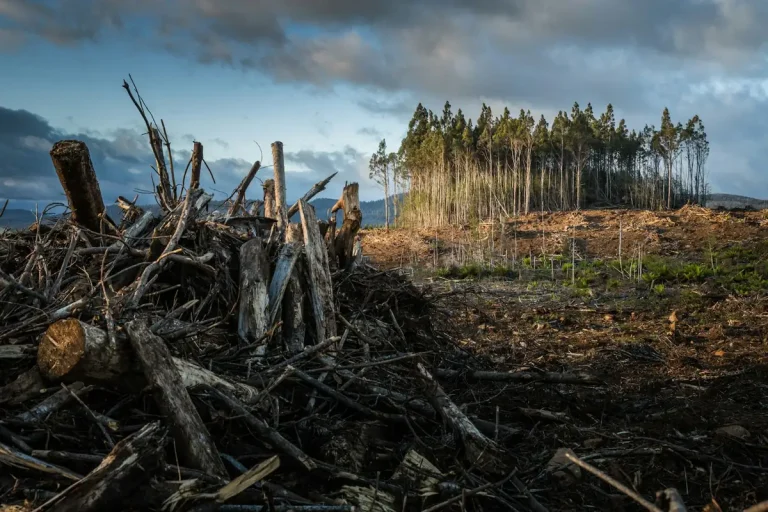
EUDR Penalties and Market Exclusion: Indonesia Risk Outlook
EUDR non-compliance exposes EU buyers of Indonesian palm oil, coffee, cocoa, rubber and timber to fines of up to 4%…