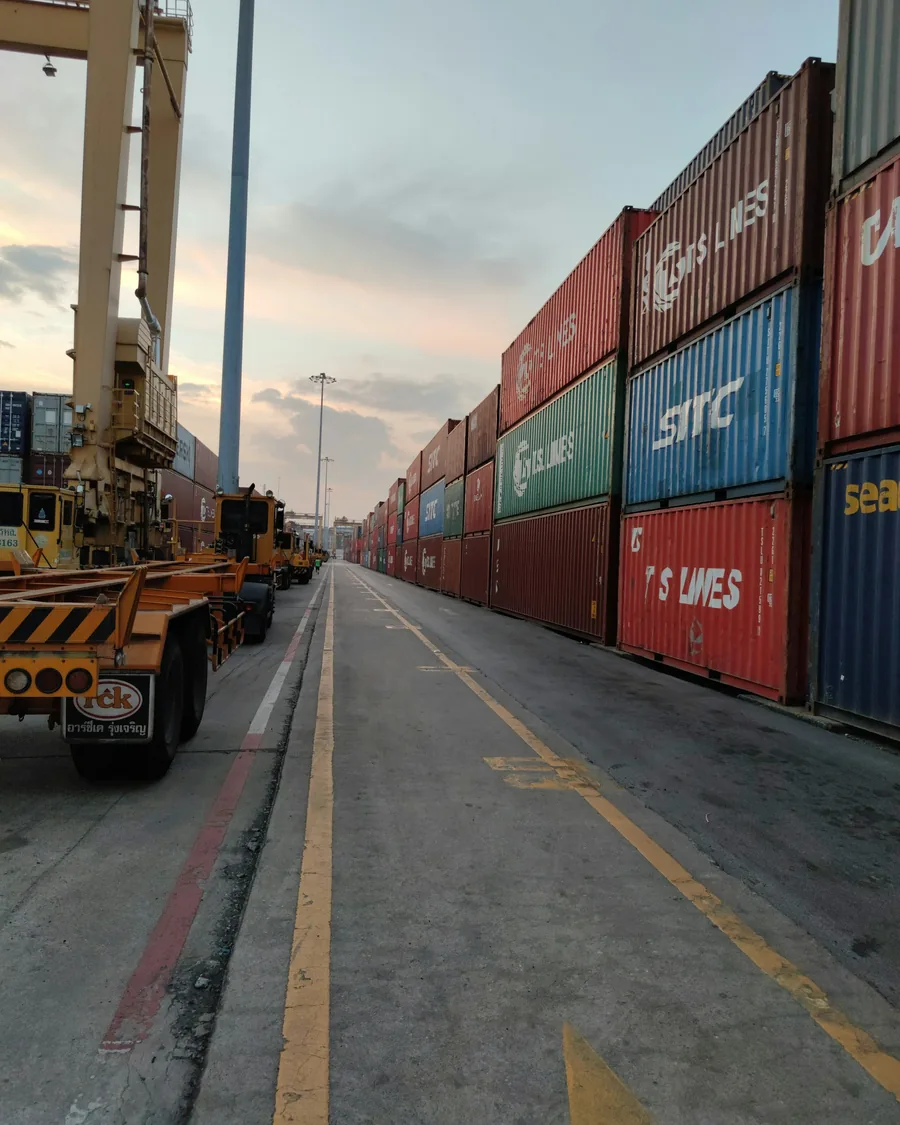
An EU importer of record consultant helps Indonesian exporters decide who legally enters their goods into the EU or UK — the party that holds the EORI number, files the customs declaration and, under EUDR, may carry operator obligations including the Due Diligence Statement. Bali Export Consultant maps that structure, then connects you to vetted licensed EU partners who execute it.
That last clause matters. We are consultants, not an EU customs broker or a law firm: this page is compliance information, not legal advice, and every structure described is executed by licensed partners in the destination member state.
What Does an EU Importer of Record Actually Do?
The importer of record (IoR) is the party named on the customs declaration when goods enter the EU. It owes the customs debt, holds the EORI number on the entry, and answers to member-state customs when paperwork fails. EU customs law generally requires the declarant to be established in the EU, so a seller in Denpasar cannot declare its own container in Rotterdam — it needs an EU buyer willing to import, an indirect customs representative who shares liability, or its own EU entity.
That customs identity now carries a second weight. The EU Deforestation Regulation, adopted in spring 2023 and in force since June 2023, covers soy, cattle, palm oil, wood, cocoa, coffee and rubber — and Indonesia produces four of the seven: palm oil, coffee, cocoa and rubber. Whoever first places those products on the EU market must prove they come from land not deforested after 31 December 2020 and were produced legally under Indonesian law. Pick the wrong IoR structure and that obligation quietly moves from your buyer to you.
Operator or Trader — Who Carries the EUDR Obligation?
EUDR assigns duties by role, not by contract label.
| Role | Who it covers | Core EUDR obligation |
|---|---|---|
| Operator | First places relevant products on the EU market or exports them | Full due diligence and a DDS filed in TRACES NT before placement |
| Non-SME trader | Larger business buying and selling after first placement | Operator-level obligations apply |
| SME trader | Smaller downstream seller | Keep records and reference upstream DDS numbers |
| Indonesian exporter selling FOB or CIF | Not established in the EU; the buyer imports | No DDS duty, but must supply the geolocation, legality and origin data the operator files |
Enforcement is staggered and sources differ: 30 December 2025 is widely treated as the date for large operators, while others cite 30 December 2026 for large and medium operators and 30 June 2027 for micro and small enterprises. As of mid-2026, confirm current dates with the European Commission. Penalties can reach 4% of EU turnover, plus confiscation and exclusion from EU public procurement.
Who Files the Due Diligence Statement?
The operator does, before the goods are placed on the market. The DDS goes into the EU TRACES NT system and references the HS code, the filer’s EORI number, country of origin and plot geolocation — a full polygon for plots over 4 hectares, a single point for plots under 4 hectares — cross-checked against a reference map of forest cover as of 31 December 2020. Behind the coordinates sit farmer identity records, national ID and land tenure documents, plus a shipment-level risk assessment covering legality and deforestation risk.
An operator may mandate an authorised representative to submit the DDS, but responsibility does not transfer with the login. Hence the structure question: whose EORI sits on the declaration, and who counts as operator? Sell DDP into Hamburg and you are very likely the operator.
The data burden is real. As of Q1 2026, roughly 18-22% of Indonesian independent smallholder hectares had verified geolocation data integrated into mill supply chains; about 5 million hectares still lacked verified EUDR documentation. Buyers know it — the Earthsight and Auriga Nusantara “Risky Business” report of October 2025 already pushed EU timber buyers to drop suppliers they judged high-risk, and SVLK holders learned that legality paper alone no longer closes a deal.
Which Structure Fits Your Sales Terms?
| Structure | Who is importer of record | Who is EUDR operator | Fits when |
|---|---|---|---|
| EXW / FOB / CIF sale to EU buyer | Buyer, own EORI | The buyer | Buyer accepts operator duty; you deliver the data pack |
| DDP via indirect customs representative | You, via a jointly liable EU representative | Usually you | Buyer refuses import formalities; margin covers compliance |
| Own EU subsidiary | Your EU entity | Your EU entity | Volume justifies incorporation and a lasting EU presence |
| UK entry | The GB EORI holder | UK forest-risk rules still pending as of mid-2026 | Selling into Britain, a separate customs territory since 2021 |
Two timing notes. The UK’s forest-risk rules under Schedule 17 of the Environment Act 2021 had not taken effect as of mid-2026 — confirm status with DEFRA. The Indonesia-EU Comprehensive Economic Partnership Agreement is expected in force in 2027, tying tariff advantages to standards, so structures chosen now should anticipate preferential-origin paperwork.
What Does a Structure Consultation Cost?
Every engagement is quote-based; the figures below are indicative as of July 2026 and subject to change.
| Engagement | What you get | Duration | Indicative fee (July 2026) |
|---|---|---|---|
| IoR structure consultation | 90-minute session plus written memo mapping operator, trader and IoR roles for one product line | 90 minutes; memo within 5 working days | IDR 4,500,000-7,500,000 |
| Structure mapping and partner referral | Incoterms review, member-state selection, introduction to a vetted licensed EU customs or fiscal representative | 2-3 weeks | IDR 15,000,000-35,000,000 |
| DDS-readiness dossier support | Geolocation, legality and origin files assembled to the standard your buyer’s TRACES NT filing needs | 4-8 weeks per commodity | IDR 25,000,000-60,000,000 |
For context, SGS Indonesia runs EUDR gap analysis from South Jakarta, and The Bali Curator lists a sourcing-and-support package at IDR 12,500,000 (as listed 2026). Final quotes depend on commodity, plot count, volume and member state.
How Does Booking Work?
- Send your trade profile. WhatsApp or email your commodity, HS code, Incoterms and target member state.
- Get a scoped quote. Within 2 working days you receive a fixed quote and a consultation slot.
- Sit the 90-minute consultation. We map operator and trader roles, DDS responsibility and customs identity options against your contracts.
- Receive the structure memo. The recommended structure, its risks, and the licensed EU partners who can execute it.
- Execute via vetted partners. We introduce the indirect representative, fiscal representative or incorporation agent; they carry the regulated work.
> Book an importer-of-record structure consultation. Message the Juara Holding Group BD desk on WhatsApp at +62 811-3941-4563 (wa.me/6281139414563) or email [bd@juaraholding.com](mailto:bd@juaraholding.com). Part of Juara Holding Group — an Indonesian group operating from Bali across Indonesia since 2015. Compliance information, not legal advice; structures are executed by vetted licensed EU partners, and no consultant can guarantee a customs or EUDR outcome.
Frequently Asked Questions
Can an Indonesian exporter be the importer of record in the EU?
Not directly. EU customs law requires the declarant to be established in the EU, so a non-EU exporter enters goods through an indirect customs representative — an EU-established broker who files the declaration and shares liability for the customs debt. Selling DDP this way also tends to make you the EUDR operator, so price that obligation before quoting.
Do I need an EU entity to file the EUDR Due Diligence Statement?
The DDS is filed by the operator — normally your EU buyer when they import under their own EORI. An operator can mandate an authorised representative to submit it, but responsibility stays with the operator. You only need an EU entity if you intend to place goods on the market yourself, for example on DDP terms.
What is the difference between an EORI number and importer of record status?
An EORI number is a registration identity used on customs declarations; importer of record is the legal role of the party responsible for the entry. Holding an EORI does not make you the IoR — the declaration names who owes the customs debt. Under EUDR, the DDS must reference the EORI of the party placing goods on the market.
Who is liable if my EU buyer refuses to act as operator under EUDR?
Then nobody can lawfully place the goods on the EU market, and shipments stall at port. Some buyers now push DDP terms precisely to shift operator duty onto sellers. Before accepting, weigh penalties that can reach 4% of EU turnover plus confiscation. A structure consultation maps who carries which duty before you sign the contract.