An Indonesia customs clearance consultant for EU lanes checks your export file — bill of lading, certificate of origin, phytosanitary certificate, importer EORI and, for coffee, cocoa, rubber or palm oil, the EUDR Due Diligence Statement — before the vessel sails, to reduce the risk of holds and rejection at EU border inspection posts — final decisions always rest with EU authorities. The lane assessment that starts the process is free.
Why Do Indonesian Shipments Get Held at EU Borders?
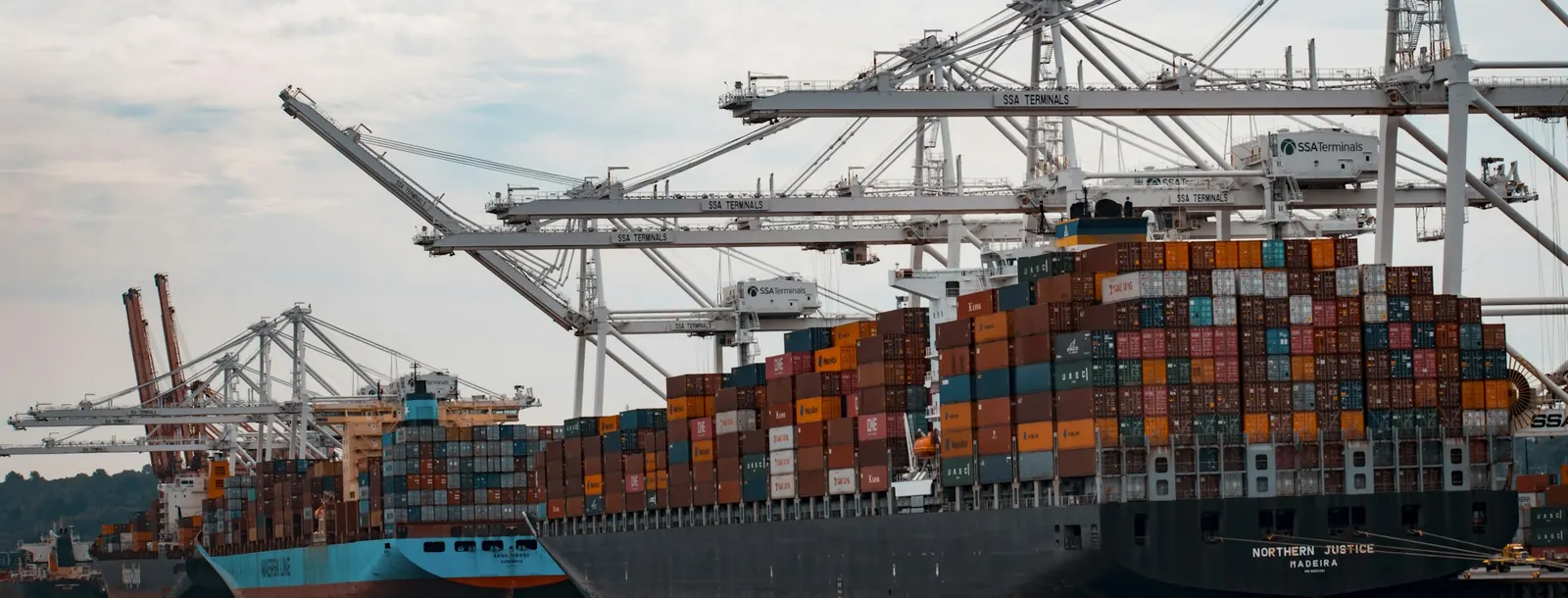
Rotterdam, Hamburg and Antwerp handle most Indonesian containers entering the EU, and each runs the same three-layer control: a documentary check on every consignment, an identity check on a sampled share, and a physical inspection where risk flags appear. Plant-origin cargo — coffee, cocoa, spices, rattan, wooden furniture — must also be pre-notified through a CHED-PP entry in the EU’s TRACES system and presented at a designated border control post. A missing signature on a phytosanitary certificate, or a weight that disagrees with the bill of lading, stops the box.
Holds are expensive. Demurrage at the big North Sea terminals commonly runs EUR 100–200 per container per day once free time lapses (typical carrier tariffs, 2026), and a physical inspection can add a week. Rejection is worse: return freight or destruction, usually billed to the exporter’s side.
Which Documents Does an EU-Bound Shipment Actually Need?
A clean Indonesia-to-EU file for plant-origin goods usually contains:
- Bill of lading — weights, consignee and HS description matching every other document
- Commercial invoice and packing list — one data source, no rounding differences
- Certificate of origin — issued through Indonesia’s e-SKA system; a REX statement on origin where GSP preference applies
- Phytosanitary certificate — from Indonesian quarantine, exact botanical name and treatment
- Importer’s EORI number — active, verifiable in the Commission’s public database
- CHED-PP pre-notification — filed in TRACES by your EU importer before arrival
- EUDR Due Diligence Statement — filed in TRACES NT for in-scope coffee, cocoa, rubber and palm oil
- ISPM 15 wood packaging marks — heat-treatment stamps on every pallet
Miss one and the container waits; miss two and the importer starts asking questions.

What Are the Most Common Rejection Causes — and Their Fixes?
| Rejection or hold cause | What the border officer sees | Fix before sailing |
|---|---|---|
| Data mismatch across documents | Weights, HS codes or consignees differ between BL, invoice and packing list | Reconcile all three line by line before documents go to the carrier |
| Defective phytosanitary certificate | Wrong botanical name, missing treatment, or issued after loading | Book quarantine inspection early; verify every field against the shipped goods |
| No CHED-PP pre-notification | Consignment reaches the border control post with no TRACES entry | Confirm in writing that your importer files the CHED-PP a day before arrival |
| Importer EORI missing or inactive | Import declaration cannot be lodged; container sits in storage | Validate the buyer’s EORI in the Commission’s open database first |
| Certificate of origin errors | HS code or origin criterion conflicts with the invoice | Align the COO with the final invoice; re-issue through e-SKA |
| Missing EUDR DDS reference | In-scope commodity declared without a DDS number | File the DDS in TRACES NT; quote the reference on the declaration |
| ISPM 15 marks absent | Untreated or unmarked wood packaging | Use HT-stamped pallets; photograph the marks during stuffing |
How Does EUDR Change Clearance for Indonesian Commodities?
The EU Deforestation Regulation, in force since June 2023, covers seven commodities; Indonesia produces four: palm oil, coffee, cocoa and rubber. Goods must be deforestation-free — produced on land not deforested after 31 December 2020 — and legally produced under Indonesian law.
The clearance mechanism is the Due Diligence Statement filed in TRACES NT before goods enter the market, referencing HS code, EORI, origin and geolocation: full polygons for plots above 4 hectares, a single point below. Without a valid DDS reference, in-scope cargo cannot be released for free circulation. Penalties can reach 4% of EU turnover, plus confiscation.
As of 2026, enforcement is staggered: 30 December 2025 is widely treated as the start for large operators, with sources also citing 30 December 2026 and 30 June 2027 for micro and small enterprises — confirm current dates with the European Commission. According to the Earthsight and Auriga Nusantara “Risky Business” report of October 2025, EU timber buyers had already dropped suppliers judged high-risk, even SVLK certificate holders.
This page is compliance information, not legal advice, and no consultant can guarantee a clearance or audit outcome.
What Does EU Lane Advisory Cost and How Long Does It Take?
Every engagement is quote-based. Figures are indicative as of July 2026, subject to change; your written quote is fixed before work starts.
| Service | Indicative fee (July 2026) | Typical duration |
|---|---|---|
| Free EU lane assessment | Free, no obligation | 2–3 working days |
| Single-shipment document review | IDR 4,000,000–8,000,000 | 3–5 working days |
| Full lane setup, first EU shipment | IDR 15,000,000–30,000,000 | 2–4 weeks |
| EUDR add-on (DDS, TRACES NT, geolocation file) | Quoted per supply chain | 1–3 weeks |
| Hold response, cargo already stopped | Quoted per case | Same-week start |
For market context, SGS Indonesia offers EUDR gap analysis from South Jakarta, and The Bali Curator lists a sourcing package at IDR 12,500,000 (as listed 2026). This desk works the customs lane itself, document by document, from Bali.
How Does Booking a Lane Assessment Work?
- Send your lane details. Product, HS code if known, destination port and buyer country — by WhatsApp, email or the enquiry form.
- Receive the free assessment. Within 2–3 working days: a written gap list showing which documents will trigger a hold and whether EUDR applies.
- Approve a fixed quote. Scope and fee agreed in writing before work begins.
- Pre-shipment review. Documents reconciled, certificates verified, DDS filed where in scope, importer briefed on CHED-PP timing.
- Sailing-to-release monitoring. The desk stays on the file until release, coordinating with your EU broker if queries arise.
Request Your Free EU Lane Assessment
Send your product, HS code and destination port; the desk returns a written gap assessment within three working days — free, no obligation. WhatsApp +62 811-3941-4563, bd@juaraholding.com, or the enquiry form on the contact page. Part of Juara Holding Group — an Indonesian group operating from Bali across Indonesia since 2015.
Frequently Asked Questions
Do I still need an EU customs broker if I use an Indonesian consultant?
Yes. The import declaration must be lodged in the destination member state, usually by a customs representative or your forwarder’s broker there. An Indonesia-side consultant prepares and verifies the export file so the broker receives clean data, and coordinates directly with them when queries arise. The two roles are complementary, not interchangeable.
How long do holds at EU border inspection posts usually last?
It depends on the check. A documentary query resolved with a corrected file typically clears in one to three working days. Identity or physical inspections at a border control post commonly add three to ten days, port workload permitting. A missing phytosanitary certificate is the worst case — re-export or destruction rather than a delay. Timelines vary by port and season.
Can I ship before my buyer’s EORI number is active?
Shipping is physically possible, but the container cannot be declared for free circulation until an active EORI exists, so it will sit in temporary storage accruing charges. EORI issuance usually takes a few working days in most member states. Verify the number in the European Commission’s public EORI database before the vessel departs Indonesia.
Does an Indonesian certificate of origin reduce EU import duty?
Sometimes. Some Indonesian products enter under the EU’s GSP scheme, which requires a REX statement on origin rather than the standard COO, and savings depend on the HS line. The IEU-CEPA trade agreement, expected in force in 2027, should widen preferential access. Check your specific HS code before pricing a shipment; a COO alone does not guarantee lower duty.
What happens if my EUDR Due Diligence Statement is missing at arrival?
In-scope coffee, cocoa, rubber or palm oil cannot be released for free circulation without a DDS reference filed in TRACES NT, so the cargo waits in storage at your cost while the statement is prepared. As of 2026, enforcement for large operators is widely cited from 30 December 2025, with later staggered dates for smaller firms — confirm current dates with the European Commission.