

EUDR Obligations for Indonesian Producers and Exporters

Indonesian producers and exporters shipping palm oil, coffee, cocoa, rubber or wood products to the EU carry five core EUDR obligations: prove the goods are deforestation-free against a 31 December 2020 cut-off, prove legal production under Indonesian law, supply plot-level geolocation data, back a Due Diligence Statement filed in the EU TRACES NT system, and support a shipment-level risk assessment.
The regulation behind those duties moved quickly. The EU Deforestation Regulation was drafted in December 2022, adopted by the European Parliament in April 2023 and by the Council in May 2023, and entered into force in June 2023. It covers seven commodities — soy, cattle, palm oil, wood, cocoa, coffee and rubber — and Indonesia produces four of them at export scale: palm oil, coffee, cocoa and rubber. Timber shipments sit under the same rules through the wood category.
This guide breaks each obligation down, with a dated timeline of enforcement stages and the Indonesian numbers that show how much work remains.
What does “deforestation-free” actually mean under EUDR?
Two tests must both pass before a shipment can legally enter the EU market.
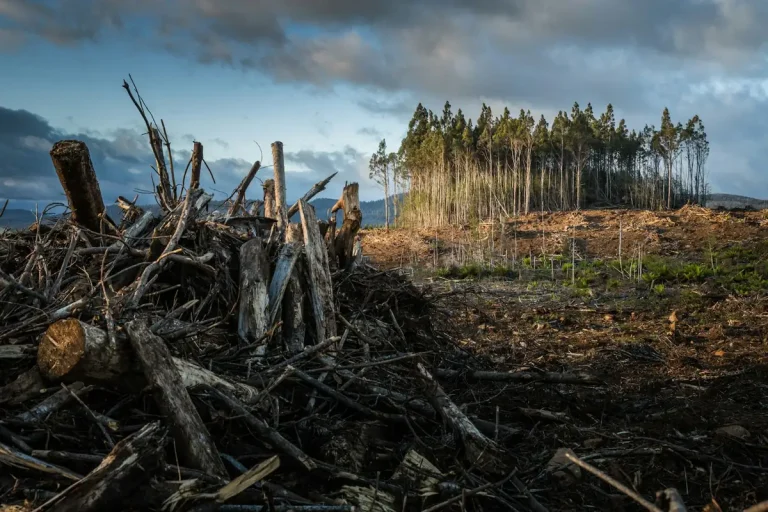
First, the deforestation-free test: the commodity must come from land that was not deforested after 31 December 2020. EU authorities check plot coordinates against a reference deforestation map showing forest cover as of that date. A plot cleared in 2019 can pass; the same plot cleared in March 2021 cannot, no matter how the land is documented today.
Second, the legality test: the goods must have been produced in line with the laws of the country of production. For Indonesian plots that means land tenure and use rights, environmental permits, labour rules and tax obligations, evidenced with documents an EU buyer can inspect.
Neither test substitutes for the other. A legally titled plantation cleared in 2022 fails; an untitled plot with intact 2020 forest cover also fails. Exporters who want the full document map — from farm records to the final statement — typically start with a structured EUDR compliance package that sequences the evidence plot by plot before the first shipment is booked.
Which enforcement dates apply, and to whom?
Enforcement is staggered, and published sources differ on the exact stages. As of 2026, treat the dates below as working assumptions and confirm the current position with the European Commission before committing shipment schedules.
| Date | Stage | Who it affects |
|---|---|---|
| December 2022 | Regulation drafted | — |
| April 2023 | Adopted by the European Parliament | — |
| May 2023 | Adopted by the Council of the EU | — |
| June 2023 | Entered into force | All supply chains start preparing |
| 31 December 2020 | Deforestation cut-off (retroactive benchmark) | Every plot supplying the EU |
| 30 December 2025 | Enforcement date widely applied to large operators | Large EU operators and traders |
| 30 December 2026 | Milestone cited by several sources for large and medium operators | Large and medium operators |
| 30 June 2027 | Deadline cited for micro and small enterprises | Micro and small EU operators |
The practical reading for an Indonesian exporter: your large EU buyers are already being held to the rules as of 2026, so the documentation burden has already arrived at your desk regardless of which later milestone applies to smaller European firms.
What geolocation data must Indonesian plots provide?
Geolocation is the obligation that decides most Indonesian readiness today. The format rules are specific:
- Plots larger than 4 hectares: full polygon coordinates tracing the plot boundary.
- Plots under 4 hectares: a single point coordinate is accepted.
- Every coordinate set is cross-referenced against the reference map of forest cover on 31 December 2020.
- Coordinates travel with farmer identity records, national ID numbers and land tenure documentation.
The gap is large. As of Q1 2026, roughly 18-22% of Indonesian independent smallholder hectares had verified geolocation data integrated into mill supply chains, and about 5 million hectares still lacked verified EUDR documentation. Indonesian government and industry studies estimate compliance costs at USD 80-150 per hectare for a typical smallholder plot — USD 400-750 million across the full 5-million-hectare gap — and only about 1% of Indonesian smallholders supplying forest-risk commodities are currently certified as meeting EU traceability and legality requirements. Those figures are dated to early 2026 and will move.
Who files the Due Diligence Statement — the exporter or the EU buyer?
The EU operator files. Before goods are placed on the EU market, the operator submits a Due Diligence Statement (DDS) in the EU TRACES NT system, referencing the HS code, the operator’s EORI number, the country of origin and the geolocation data for every plot in the shipment.
The filing obligation sits in Europe, but the evidence obligation sits in Indonesia. An operator cannot file what it never received, so contracts increasingly push the data burden upstream: the Indonesian exporter assembles the coordinates, tenure papers, identity records and legality evidence, and the buyer’s compliance team builds its DDS on top of that pack.
Attached to every DDS is a shipment-level risk assessment covering both legality and deforestation risk. Where risk is judged non-negligible, extra documentation is required before the shipment clears.
| Obligation | What the Indonesian side supplies | Where it lands |
|---|---|---|
| Deforestation-free proof | Plot coordinates checked against the 31 Dec 2020 map | DDS in TRACES NT |
| Legality proof | Land tenure, permits, labour and tax evidence | Buyer’s risk assessment file |
| Geolocation | Polygons above 4 ha, points below 4 ha | DDS plot data |
| Traceability | Farmer identity and national ID records | Buyer’s due diligence records |
| Risk assessment support | Shipment-level dossier, extra papers where risk is non-negligible | Operator’s DDS annexes |
What happens when an exporter falls short?
Penalties fall on the EU operator, but the commercial pain lands on the supplier. Fines can reach 4% of the operator’s EU turnover, with confiscation of the goods and exclusion from EU public procurement on top. No buyer absorbs that exposure for a supplier who cannot document plots.
The market is already moving. According to the Earthsight and Auriga Nusantara report titled Risky Business, published in October 2025, EU timber buyers began dropping high-risk Indonesian suppliers before full enforcement even arrived. Timber exporters holding SVLK legality certification should note the limit of that document: SVLK evidences legal harvest, but it must now be complemented with EUDR-level due diligence — geolocation, the 2020 cut-off test and DDS support — because legality alone satisfies only one of the two tests.
How is Indonesia responding, and what should exporters do now?
Jakarta is not standing still. Indonesia is building the GroundTruthed.id (GTID) forest-monitoring platform and reconciling its forest and commodity data with the EU. The Indonesia-EU Comprehensive Economic Partnership Agreement (IEU-CEPA) is expected to enter into force in 2027, tying tariff advantages to exactly these standards — which turns EUDR readiness from a defensive cost into a tariff play.
A workable sequence for an exporter starting in 2026: map every supplying plot to the correct coordinate format, collect tenure and identity documents alongside the coordinates, run a gap check against the 31 December 2020 benchmark, then build a repeatable shipment dossier your buyer’s compliance team can lift straight into TRACES NT.
This article is compliance information, not legal advice. Enforcement dates and technical requirements shift; confirm the current position with the European Commission or a licensed consultant before relying on any date or figure above.
Frequently Asked Questions
Do Indonesian smallholders have to file their own Due Diligence Statement?
No. The DDS is filed by the EU operator in the TRACES NT system before goods enter the EU market. Smallholders never touch the system directly, but their data — plot coordinates, national ID and land tenure records — must reach the operator through the exporter, because a statement cannot be filed on missing plot evidence.
Is SVLK certification enough to meet EUDR obligations for wood exports?
No. SVLK evidences legal harvest under Indonesian law, which covers only the legality test. EUDR adds the deforestation-free test against the 31 December 2020 benchmark, plot geolocation in the required format, and DDS support. The Earthsight and Auriga Nusantara Risky Business report of October 2025 showed EU buyers already dropping suppliers who stopped at SVLK.
What geolocation format do EUDR obligations require for Indonesian plots?
Plots larger than 4 hectares need full polygon coordinates tracing the boundary; plots under 4 hectares may submit a single point coordinate. Every coordinate set is cross-checked against the EU reference map of forest cover on 31 December 2020, and the coordinates must travel with farmer identity records and land tenure documentation.
Keep reading

EUDR
EUDR SME Deadline 2027: A Month-by-Month Plan
Scope: a month-by-month countdown plan to 30 June 2027 — the readiness checklist itself lives in our coffee & cocoa…

EUDR
Zero Deforestation Sourcing: Indonesia to EU Post-2026
Zero-deforestation sourcing for Indonesian exporters selling into Europe after 2026 means rebuilding supply chains around suppliers who can prove, with…
EUDR
EUDR Penalties and Market Exclusion: Indonesia Risk Outlook
EUDR non-compliance exposes EU buyers of Indonesian palm oil, coffee, cocoa, rubber and timber to fines of up to 4%…