
EU Market Entry for Rubber, Coffee, Cocoa Under EUDR
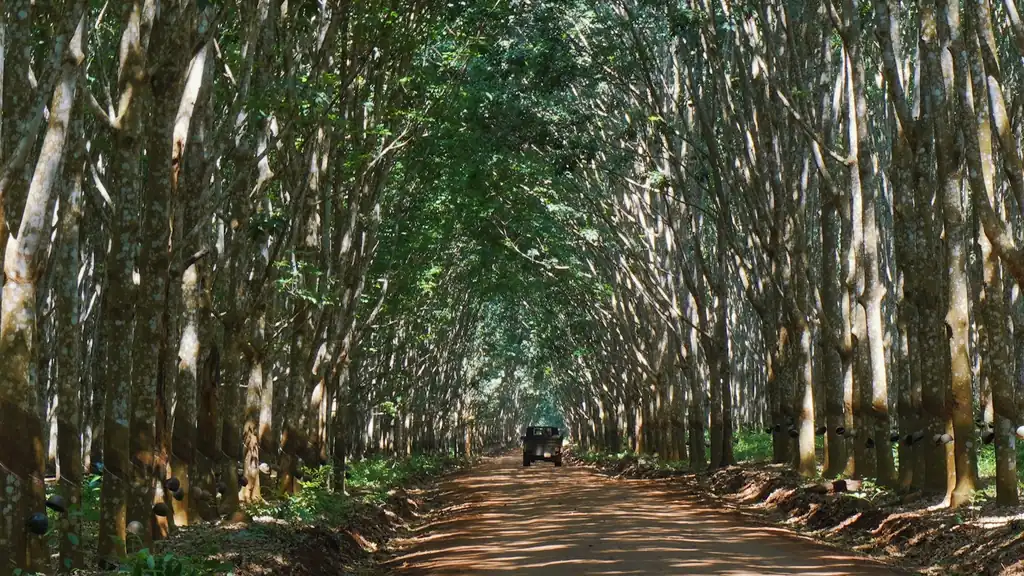
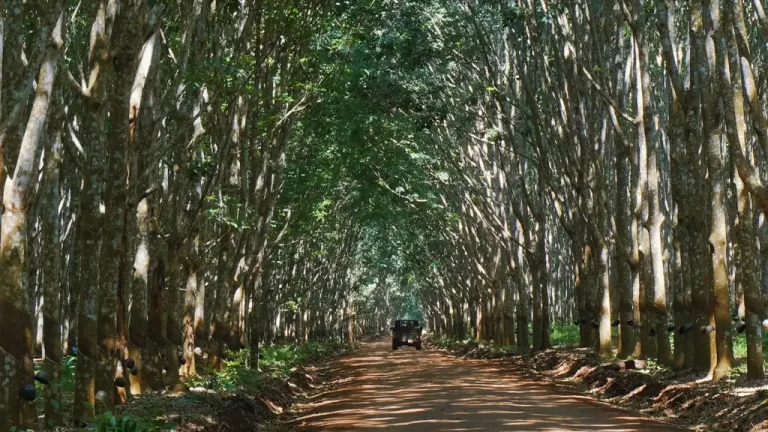
EU market entry for Indonesian rubber, coffee and cocoa now runs through EUDR due diligence. Buyers must file a Due Diligence Statement proving every shipment is deforestation-free and legally produced before it clears EU customs. As of 2026, suppliers who can hand over verified plot geolocation and legality records win contracts; those who cannot are quietly delisted.
One note before the detail: this is an outlook, not a prediction. The signals below carry 2025 and 2026 dates, the conclusions point at 2027, and enforcement timelines have moved before. Confirm current dates with the European Commission before you build a launch calendar around them.
Why Does EUDR Decide Who Gets EU Shelf Space?
The EU Deforestation Regulation was drafted in December 2022, adopted by the European Parliament in April 2023 and by the Council that May, and entered into force in June 2023. It covers seven commodities — soy, cattle, palm oil, wood, cocoa, coffee and rubber. Indonesia produces four of the seven, and three of those four — rubber, coffee and cocoa — are the subject of this piece.
The mechanics are what reshape procurement. Before goods enter the EU, the operator files a Due Diligence Statement (DDS) in the TRACES NT system referencing the HS code, the EORI number, the origin, and the geolocation of every plot that produced the goods: full polygon coordinates for plots larger than 4 hectares, a single point coordinate for plots under 4 hectares. Those coordinates are cross-referenced against a reference deforestation map showing forest cover as of 31 December 2020. Land cleared after that date is excluded, whatever the paperwork says.
Penalties for getting it wrong can reach 4% of a company’s EU turnover, plus confiscation of the goods and exclusion from EU public procurement. That asymmetry explains buyer behavior: a supplier saves a few months of data work, the buyer risks a fine measured in millions of euros. European importers now audit origin data before they discuss price.
For an Indonesian exporter, the practical consequence is that the DDS data pack has become a sales asset. Assembling it — farmer identity records, national ID and land tenure documentation, plot coordinates, plus a shipment-level risk assessment covering legality and deforestation risk — is the core preparation an export readiness consultant Bali agri-exporters engage before signing a first EU contract. Where risk is judged non-negligible, extra documentation is required on top.
What Did the 2025-2026 Signals Actually Show?
Four dated signals point the same direction.
| Signal (dated) | What happened | What it suggests for 2027 |
|---|---|---|
| “Risky Business” report, October 2025 | The Earthsight and Auriga Nusantara investigation pushed EU timber buyers to drop high-risk Indonesian suppliers | Buyers delist rather than remediate; the pattern transfers to rubber, coffee and cocoa |
| Smallholder traceability, Q1 2026 | Roughly 18-22% of Indonesian independent smallholder hectares had verified geolocation data integrated into mill supply chains | Compliant volume is scarce; documented suppliers hold pricing power |
| Documentation gap, 2026 | About 5 million hectares still lacked verified EUDR documentation | The gap will not close by 2027; whoever closes their own piece of it first stands out |
| IEU-CEPA, expected 2027 | The Indonesia-EU Comprehensive Economic Partnership Agreement is expected to enter into force, tying tariff advantages to standards and sustainability | Tariff savings and compliance converge on the same documented suppliers |
The cost side is equally concrete. Indonesian government and industry studies estimate compliance at USD 80-150 per hectare for a typical smallholder plot — USD 400-750 million across the 5-million-hectare gap — and as of early 2026 only about 1% of Indonesian smallholders supplying forest-risk commodities were certified as meeting EU traceability and legality requirements. Read that 1% two ways: a national problem, and a commercial opening for anyone inside it.
Indonesia is not standing still. The GroundTruthed.id (GTID) forest-monitoring platform is being built, and Jakarta is reconciling forest and commodity data with the EU. Useful national infrastructure — but as of 2026 the per-shipment data burden still sits with the supply chain, not the state.
How Do Rubber, Coffee and Cocoa Each Play Out?
The three commodities share a regulation but not a starting position.
| Commodity | Supply structure | Main EUDR friction | How compliant suppliers win |
|---|---|---|---|
| Rubber | Overwhelmingly independent smallholders selling through village collectors and dealers into crumb-rubber processing | Multiple aggregation layers blur plot origin; one unmapped farm in a mixed lot can undermine the DDS | Direct-sourcing clusters with mapped plots give EU tire and glove makers a defensible statement |
| Coffee | Smallholder-grown; specialty lots already carry farm-level identity, commercial grades usually do not | Commercial-grade blends aggregate many farms with no records | Specialty and single-origin exporters are closest to EUDR-ready; most plots sit under 4 hectares, so a point coordinate suffices |
| Cocoa | Smallholder beans, much of it semi-processed before export | EU grinders demand mapped farm data down the chain, and farm records are thin | Cooperatives that map their members can enter EU premium and certified programs ahead of unmapped competitors |
Two structural notes. First, the sub-4-hectare rule works in Indonesia’s favor: most smallholder plots fall under it, so a single GPS point per farm — not a surveyed polygon — carries the legal load, which lowers the mapping cost floor. Second, the timber precedent matters. Indonesian timber exporters hold SVLK legality certification, yet after October 2025 SVLK alone did not stop EU buyers dropping suppliers; certification must now be complemented with EUDR-level due diligence data. Rubber, coffee and cocoa exporters should expect the same standard: national certificates help, plot data decides.
What Should a 2027 Entry Plan Contain?
A workable sequence, ordered by dependency rather than difficulty:
- Confirm your enforcement date. As of 2026 the dates are staggered and sources differ: 30 December 2025 is widely treated as enforcement for large operators, while other sources cite 30 December 2026 for large and medium operators and 30 June 2027 for micro and small enterprises. Check the European Commission’s current position, not a summary.
- Map plots first. Point coordinates for farms under 4 hectares, polygons above. Nothing downstream works without this layer.
- Collect legality records. Farmer identity, national ID and land tenure documentation, matched to each mapped plot.
- Build the shipment-level risk assessment. Cover legality and deforestation risk; prepare extra documentation for any lot where risk is non-negligible.
- Rehearse the DDS with your EU buyer. The operator files in TRACES NT, but the data is yours; a dry run exposes gaps before money moves.
- Price the work with dated quotes. For context: SGS Indonesia offers EUDR gap analysis from South Jakarta, and Bali-based The Bali Curator listed a sourcing-and-support package at IDR 12,500,000 as of 2026. Fees across this market are quote-based and subject to change, so date every number you rely on.
None of this guarantees an audit or customs outcome — nobody can promise that, and this article is compliance information, not legal advice. What the 2026 signals do support is a narrower claim: verified supply is scarce, EU buyers turned risk-averse after October 2025, and IEU-CEPA is expected to add a tariff reward in 2027 for exporters who already hold the data. The shelf space is going to whoever can prove where their rubber, coffee and cocoa grew.
Frequently Asked Questions
Do Indonesian rubber exporters need geolocation for every smallholder plot?
Yes, as of 2026 every plot that produced the rubber in a shipment must be geolocated in the Due Diligence Statement: a single point coordinate for plots under 4 hectares, full polygon coordinates above that. Aggregated lots from unmapped collector networks cannot generate a valid DDS, so mapping has to reach the farm level. Confirm current technical rules with the European Commission.
Will IEU-CEPA replace or ease EUDR compliance for coffee and cocoa?
No. IEU-CEPA, expected to enter into force in 2027, is a trade agreement that lowers tariffs; EUDR is a regulation that conditions market access on deforestation-free due diligence. They stack rather than substitute: the tariff advantage only pays out for exporters whose geolocation and legality data already satisfy EUDR. Treat CEPA as a reward for compliance, not a shortcut around it.
Which EUDR enforcement date applies to a small Indonesian exporter?
As of 2026, published dates are staggered and sources differ: 30 December 2025 is widely treated as the enforcement date for large operators, other sources cite 30 December 2026 for large and medium operators, and 30 June 2027 for micro and small enterprises. The applicable bracket follows your EU buyer’s size category, so confirm it with the European Commission or a licensed adviser.
Keep reading

EUDR
EUDR SME Deadline 2027: A Month-by-Month Plan
Scope: a month-by-month countdown plan to 30 June 2027 — the readiness checklist itself lives in our coffee & cocoa…

EUDR
Zero Deforestation Sourcing: Indonesia to EU Post-2026
Zero-deforestation sourcing for Indonesian exporters selling into Europe after 2026 means rebuilding supply chains around suppliers who can prove, with…
EUDR
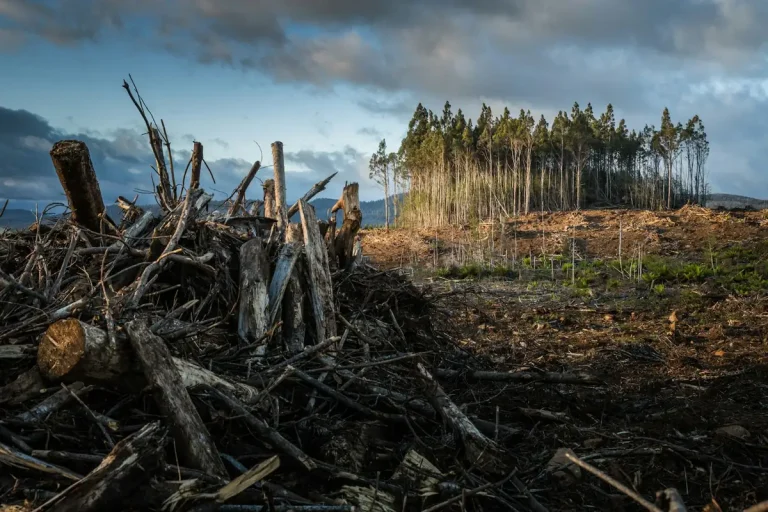
EUDR Penalties and Market Exclusion: Indonesia Risk Outlook
EUDR non-compliance exposes EU buyers of Indonesian palm oil, coffee, cocoa, rubber and timber to fines of up to 4%…